

Plaque psoriasis treatment
Plaque psoriasis Prescription treatment

Sharoe Green Pharmacy
272 Sharoe Green Lane, Fulwood, Preston, PR2 9HD
Cost: £20
Pay in storePsoriasis is a common skin condition that causes itchy and painful patches of dry, flaky skin. It cannot be cured, but there are treatments to help manage your symptoms.
Symptoms of psoriasis
The main symptom of psoriasis is dry, itchy, sore, flaky patches of skin that form what look like silvery-white scales.
Psoriasis patches are usually:
1 to 2cm in size
an oval or irregular shape.
pink or red on white skin, turning silvery-white, and can sometimes turn a waxy yellow or orange-brown colour
grey on brown or black skin, and cause dark marks on the skin after the psoriasis has gone
Most people only get a few psoriasis patches, but others get them across large parts of their body. Some people have lots of smaller, scaly patches.
You may also get lots of small brown and yellow spots on the palms of your hands and soles of your feet.
You can get psoriasis in different parts of your body, but it's mostly found on the:
head and behind the ears
chest, tummy and back
bottom
forearms and elbows
lower legs and knees
You can also get it in the folds of your body, such as your groin, genitals and under your breasts, or on your fingernails. The surface of your nails can have dents and pits.
You can get psoriasis at any age, but symptoms often start either between the ages of 15 and 25, or 50 and 60 .
There are usually times where your symptoms get worse (called flare-ups) and times when they're better.
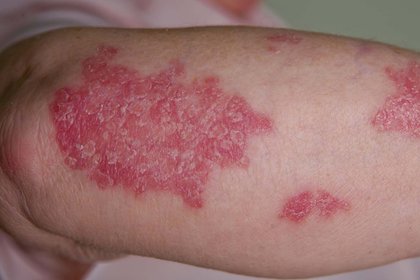
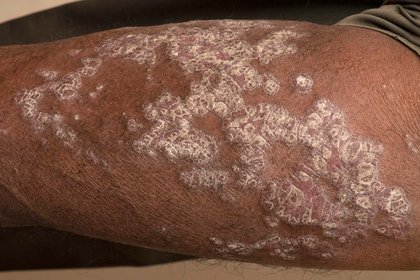
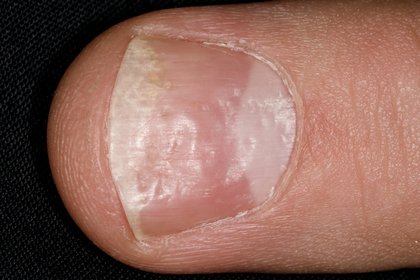
L
Some people with psoriasis can develop psoriatic arthritis as they get older. This is an inflammatory condition that affects the joints.
See a GP if:
you have symptoms of psoriasis
you have psoriasis and your treatment is not working or is giving you side effects
you have psoriasis and also have pain, stiffness and swelling in your joints that keeps coming back
Call 999 or go to A&E if:
You have psoriasis and:
your skin quickly turns red and you develop white, pus-filled bumps that join together – redness may be harder to see on brown or black skin
have psoriasis patches on your feet that turn yellow-brown and are filled with pus
your fingers and toes have red, scaly pus-filled bumps on the tips – redness may be harder to see on brown or black skin
These can be signs that you have a more serious condition or an infection.
You may also have other symptoms such as your heart beating fast, or a high temperature, or feeling hot, cold or shivery.
Treatment for psoriasis
How your psoriasis is treated depends on the type of psoriasis you have, how severe it is, and where it is on your body.
The main treatments are:
vitamin D creams, lotions, ointments and gels
moisturising creams, lotions, ointments and gels for your skin and to wash with (emollients)
steroid creams, lotions or gels
other treatments for your skin or scalp, such as coal tar
If your psoriasis is more severe, there are other treatments, such as light therapy and medicines.
You may need a combination of different treatments.
Things you can do to help with psoriasis
Do
try to avoid the things that make your symptoms worse (triggers)
have a healthy, balanced diet
get regular exercise
try to reduce stress if you can
try not to drink too much alcohol
try to stop smoking, if you smoke
Don’t
do not share your moisturising treatments (emollients) with anyone else
do not put your fingers into a pot of emollient – use a spoon, spatula or pump dispenser instead
do not smoke or go near naked flames if you use an emollient – clothing and bedding that's been in contact with an emollient burns more easily
Please register with PharmaDoctor using the link after booking
https://pharmadoctor.co.uk/patient/location-referrer/11514/71