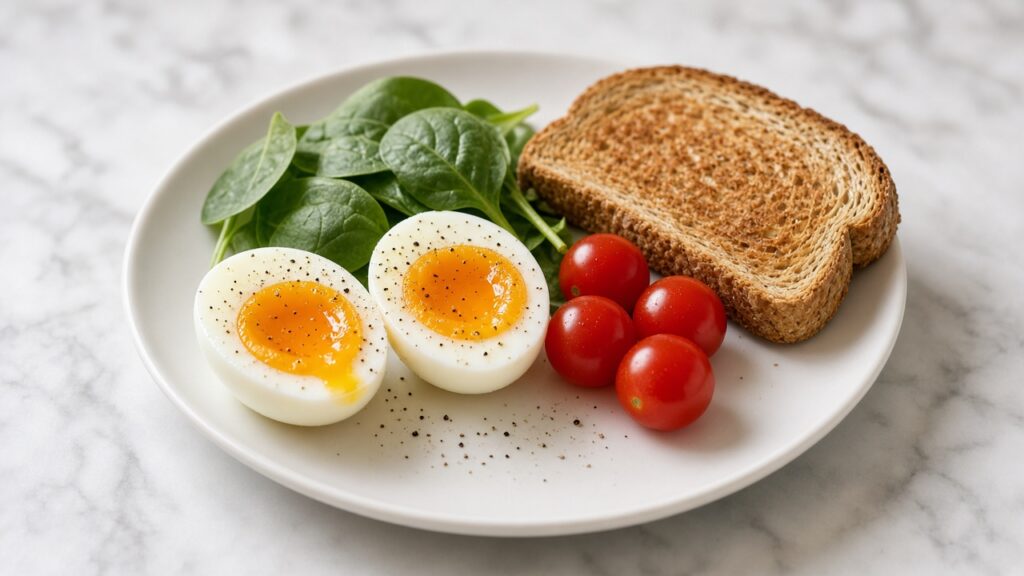
For most people, around 1–3 eggs a day can sit comfortably in a weight-loss eating plan, as long as the rest of the day is balanced. Some people do fine with up to about 3–4, especially if eggs are replacing a less filling breakfast or snack. There isn’t a single magic number that works for everyone.
Eggs help because they’re high in protein, which can keep you fuller for longer. That can make it easier to eat fewer calories overall — which is what actually drives weight loss. Eggs aren’t a fat-burning shortcut on their own.
A sensible daily range
- 1–2 eggs — a solid everyday amount for many adults
- Up to 3–4 — still reasonable for most people if overall calories and saturated fat stay in check
- More than that most days — fine for some active people, but worth checking how the rest of your diet looks (and ask a clinician if you have high cholesterol, heart disease, or you’ve been given personalised advice)
If you’re using eggs for weight loss, how you cook them matters. Poached, boiled, or lightly scrambled without lots of butter or oil keeps the meal lower in calories. Pair eggs with vegetables, wholegrains, or salad rather than only bacon, cheese, and fried extras.
Rough nutrition for one medium egg
Around 70–80 calories, with roughly 6–7g of protein, plus useful nutrients such as choline and vitamin D. Three eggs is still a modest calorie hit for the protein you get — which is why they work well at breakfast or as a snack.
Best ways to eat eggs when you’re trying to lose weight
- Boiled eggs as a portable snack
- Poached eggs on wholegrain toast with spinach or tomatoes
- A vegetable omelette cooked with a spray of oil, not a heavy pour of butter
- Soft-boiled or scrambled eggs with beans or salad for more fibre and fullness
What about cholesterol?
Eggs do contain dietary cholesterol, mainly in the yolk. For most people, that has less effect on blood cholesterol than saturated fat from the wider diet (butter, fatty meats, cheese, fried foods). UK heart charities generally say there’s no fixed “egg limit” for healthy adults eating a balanced diet. If you have familial hypercholesterolaemia, very high cholesterol, or you’ve been told to limit dietary cholesterol, follow your GP or dietitian’s advice.
Is an “egg diet” a good idea?
Short answer: no as a sole plan. Living on only boiled eggs for days or weeks is hard to stick to, can crowd out other nutrients, and isn’t how lasting weight loss usually works. Use eggs as one useful food inside a normal balanced pattern — not as the whole diet.
Eggs and Healthera’s weight-loss support
Food changes like this are one part of the picture. If you’re looking at structured weight-loss support through pharmacy, start here: Weight loss · find a pharmacy near you.
Frequently asked questions about eggs and weight loss
How many eggs should I eat per day to lose weight?
Most people do well with 1–3 a day (sometimes up to about 3–4) as part of a calorie-controlled, balanced diet. More isn’t automatically better.
Are eggs good for weight loss?
Yes for many people — mainly because protein helps fullness. They help most when they replace less filling or higher-calorie options, not when they’re piled on top of everything else.
Are boiled eggs good for weight loss?
Often yes. Boiling (or poaching) adds almost no extra fat or calories compared with frying in oil or butter.